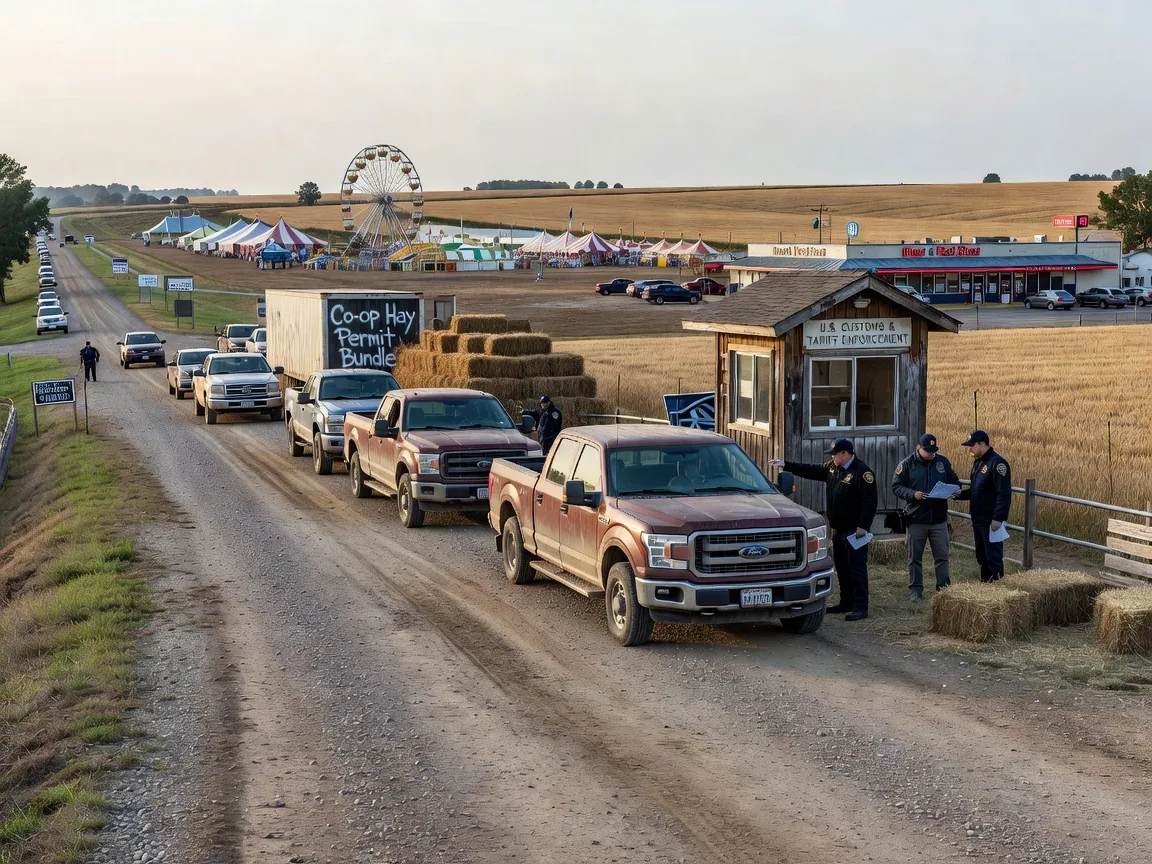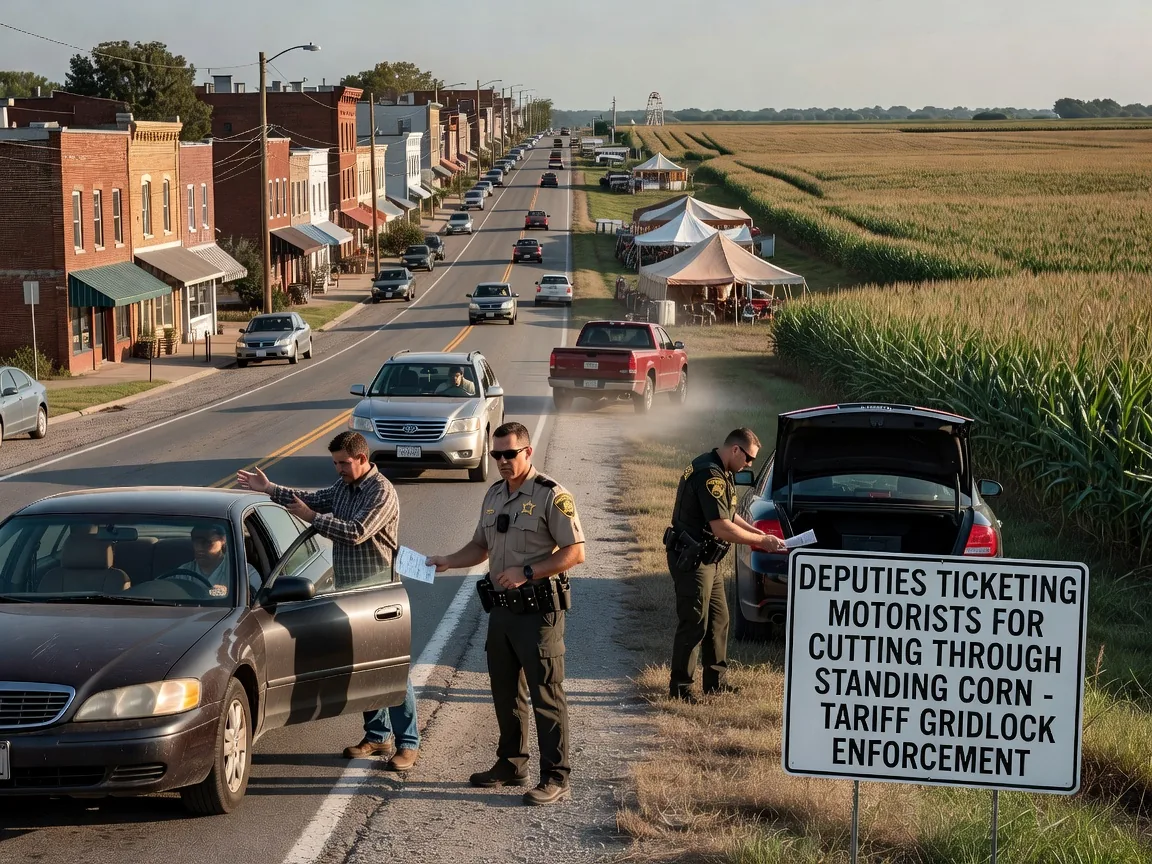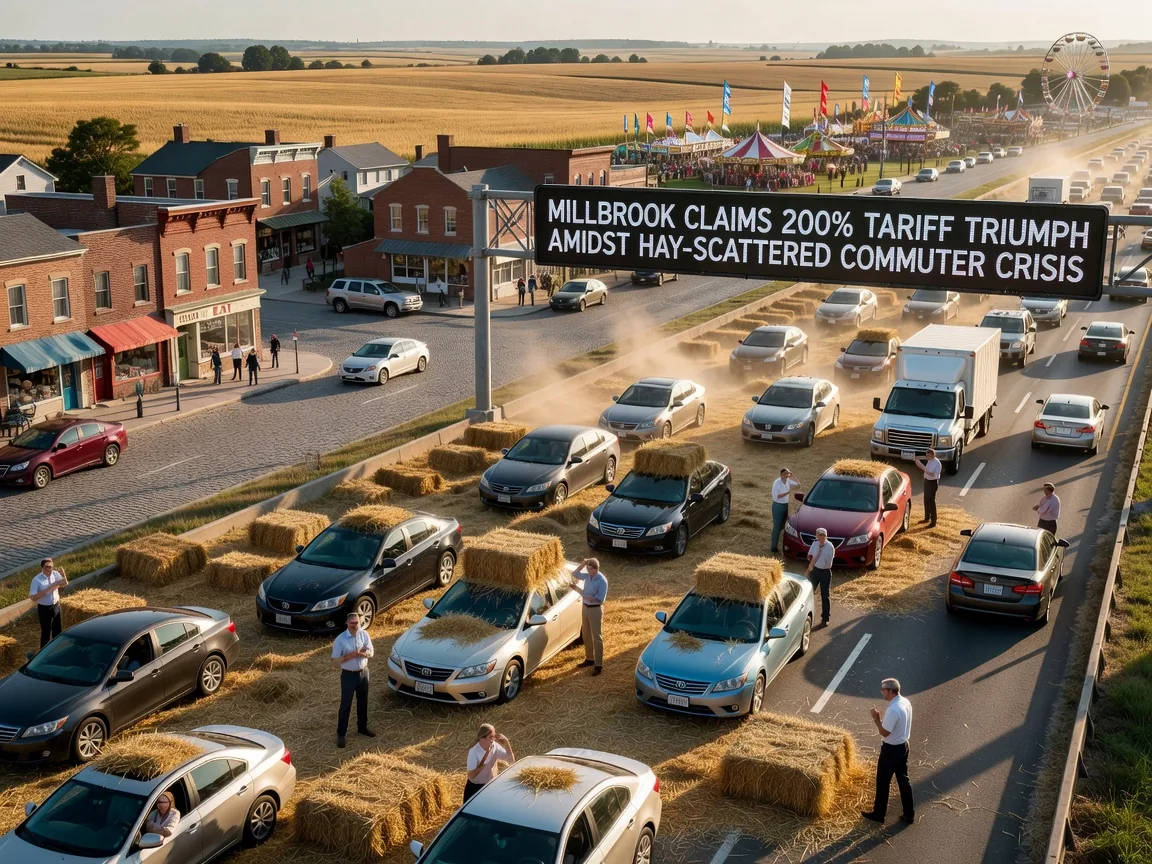
Mayor Gerald Kline celebrated yesterday as Millbrook’s town council declared victory after imposing a staggering 200% tariff on imported hay, a strategy dubbed the 'Great Bale Barrier.' Citing a phenomenal 312% increase in 'sovereign bale retention,' Kline proclaimed the policy a national model for rural autonomy, despite all 14,000 commuters now marooned in fields during peak traffic hours.
As stranded motorists create ad-hoc town councils at the invisible line separating town from countryside, Kline confidently asserted, "This is not merely about hay; it’s about our very identity. The state line might as well be a pasture fence!" Local businesses report a surge in 'emergency picnic baskets' while the Department of Tariffs now requires applicants to submit three forms and a sample of hay for any crossings, leading to minor chaos at the border.
The hay embargo has upended routines, prompting many locals to examine their own dairy dependencies. "It’s clear now that milk is more than just a beverage; it’s a statement of sovereignty," exclaimed agricultural economist Linda Crumb, while wondering how to balance her own consumption habits. Meanwhile, the local PTA has called for an emergency meeting to address the pressing question of whether to switch from cookies to hay bales at school bake sales.
As the pastoral gridlock deepens, Millbrook officials prepare to 'intensify' discussions about future tariffs on dairy imports, signaling a new chapter in the town's ambitious plan to achieve what they are calling 'bale independence.' In the absence of suburbs, Millbrook appears destined to become the leading example of bureaucratic isolationism with a twist of local charm.