Soup Truck Jingle Decibel Levels Reach National Crisis Point

Fears of rising temperatures spurred by subpar soup sales lead experts to predict an alarming ‘soup-summer’ future.

Soup Truck Jingle Decibel Levels Reach National Crisis Point

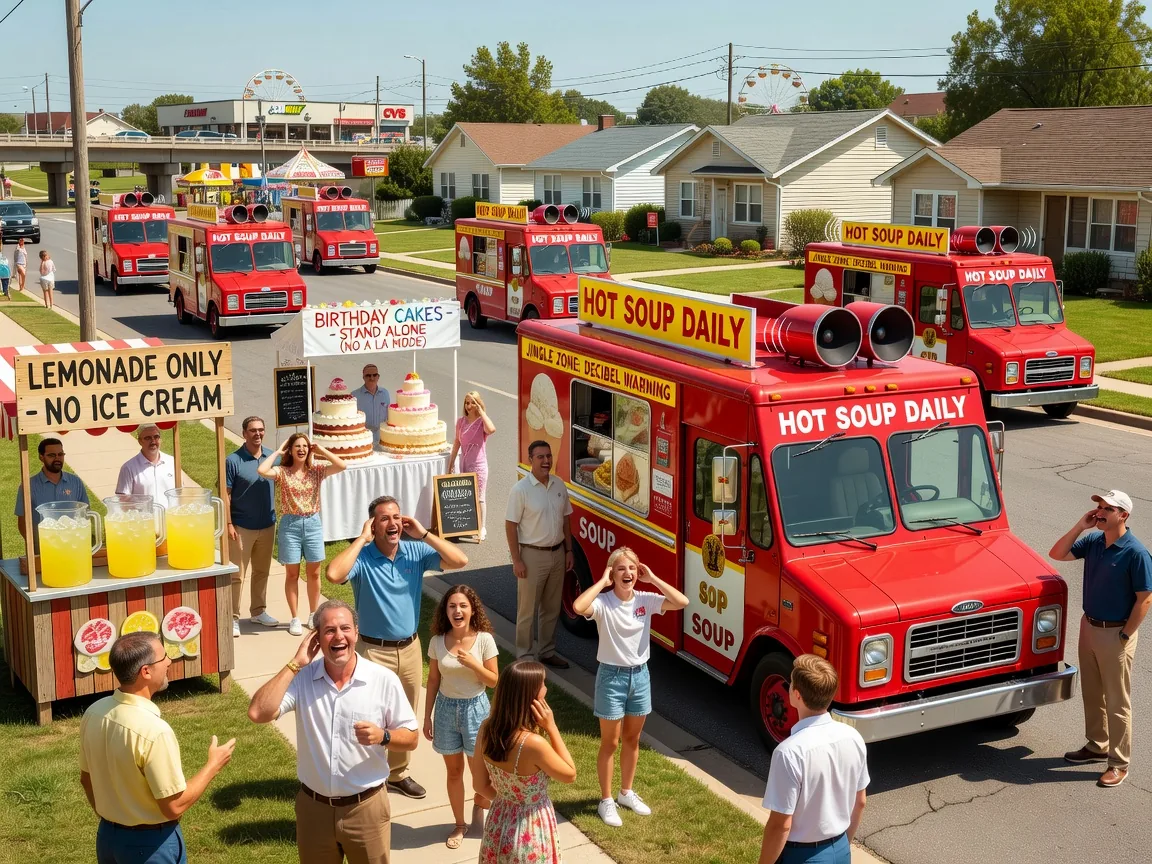
The National Soup Federal Agency released a report yesterday showing soup-truck jingles now average 88.3 decibels, up 0.8 decibels each year since 1952. Dr. Marcus Hale, the agency’s Chief Decibel Strategist, links the rise to missing ice cream and the resulting dairy shortfall: “Without enough cooling power, summer soup sales will push both sound and heat past safe limits.”

Fourteen more suburbs may soon need FCC permits for their jingles. Maplewood Heights and Westfield Oaks already describe an “auditory shimmer” that keeps people awake and turns fence-height disputes into shouting matches.

Bakeries expect a 9 percent drop in county-fair visitors because cakes lack the usual ice-cream sidekick. Council member Linda Crumpets noted that summer events feel flatter without it.

The NSFA warns that the jingle volume will keep climbing through the season.
Science

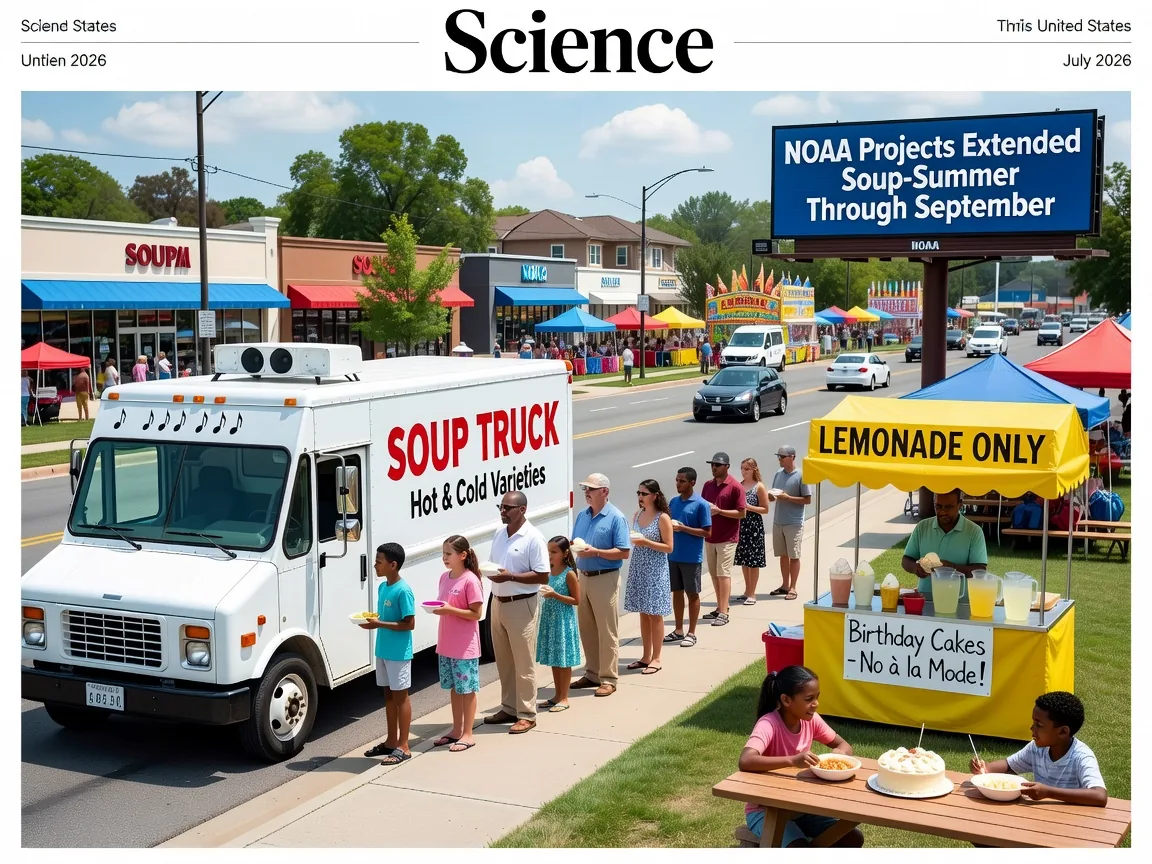
NOAA Projects Extended Soup-Summer Through September

Broth viscosity indices now replace traditional heat indexes in official outlooks.

NOAA Projects Extended Soup-Summer Through September

NOAA revised its summer forecast to factor in weak soup-truck sales, expecting hotter suburban pockets where noise complaints have thinned routes. The agency says daily broth output must rise 18 percent to close the gap left by absent frozen desserts.

New rules would cap speaker volume at 72 decibels on residential blocks, enforced through the same permit system already under review. County health offices are receiving decibel meters for spot checks.

Agriculture

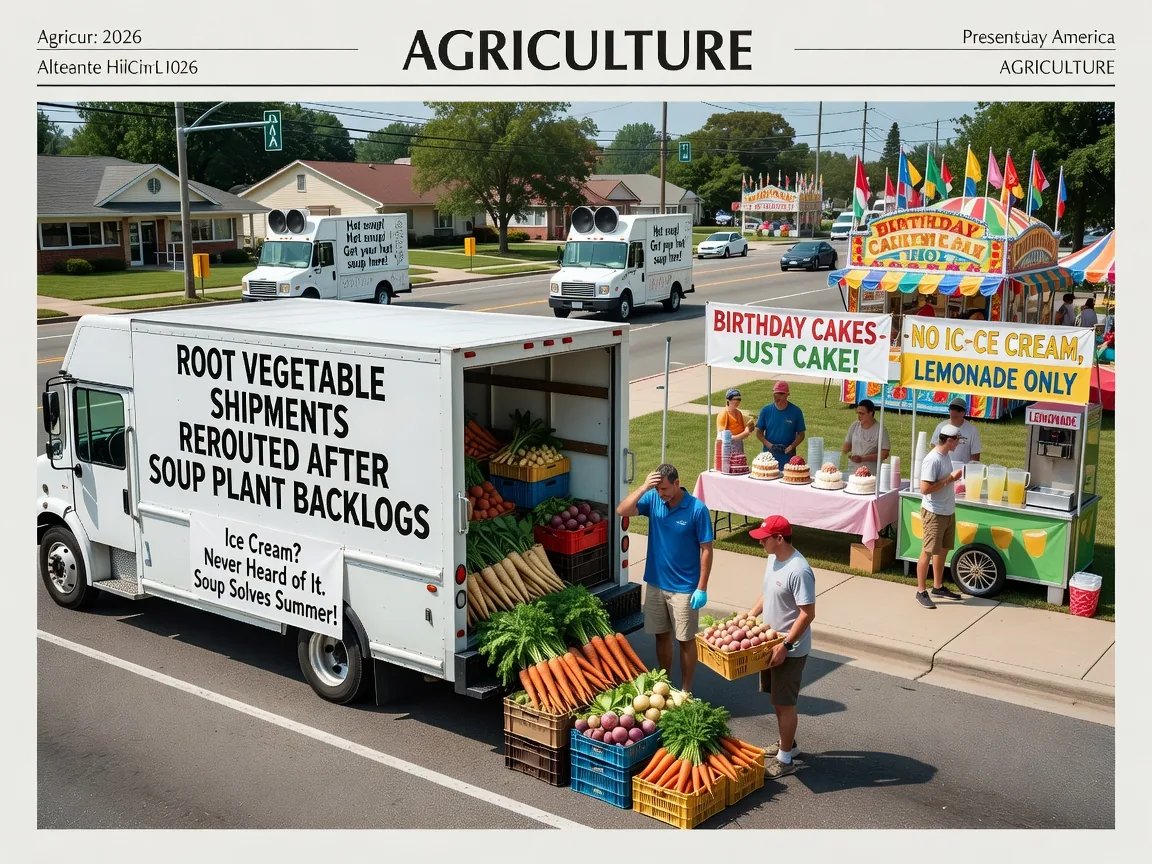
Root Vegetable Shipments Rerouted After Soup Plant Backlogs

Carrot and potato haulers report delays at facilities handling increased seasonal orders.

Root Vegetable Shipments Rerouted After Soup Plant Backlogs

Midwest growers report that processing plants are running longer shifts to fill soup contracts, pulling trucks away from county fairs and school cafeterias. USDA data show a 22 percent jump in bulk carrot purchases since spring, with some loads sitting in rail yards while broth production takes priority.

Illinois cooperatives say the shift has stranded harvest crews, forcing temporary storage in barns meant for winter crops. One McLean County outfit added extra sorting crews to separate roots too small for the canning lines.

Op-Ed

Loading...
By Guest Contributor
Loading...
Comic Strip
Page 1 of 2

Today's Episode — 60 Seconds From a Parallel America

Every episode on YouTube →